Our Projects
Made AT Kenya
Country: Kenya
Project duration Phase 1: January 2022 – 31 December 2023
Partners: Government of Kenya, Jomo Kenyatta University of Agriculture and Technology
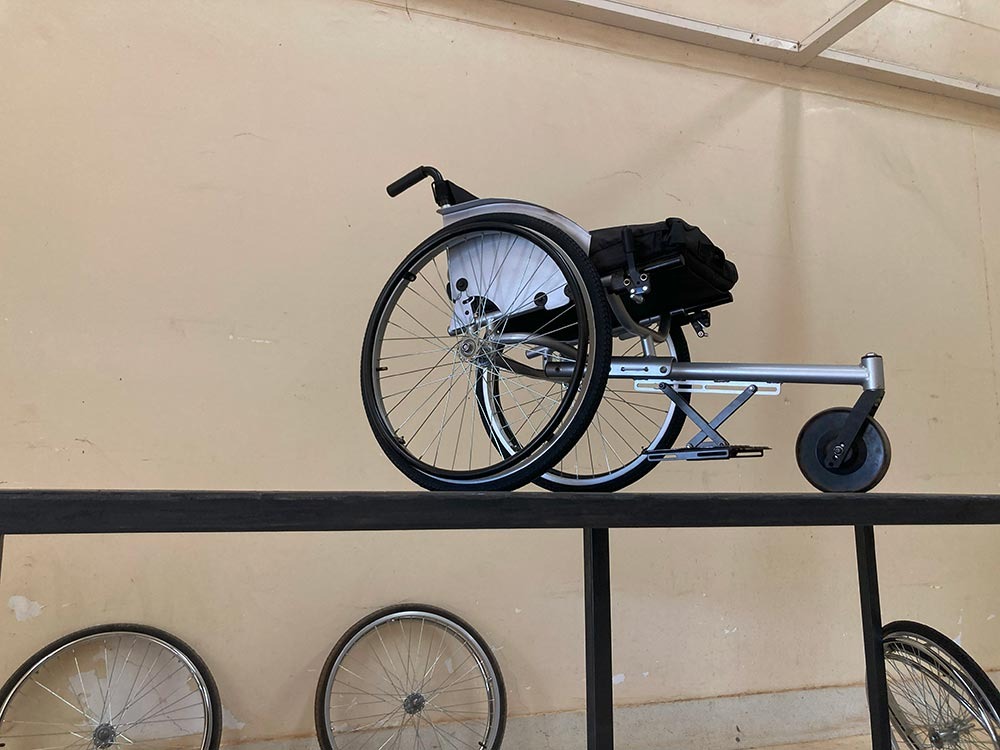
Focus: Designing and manufacturing a Kenyan-made wheelchair to demonstrate it is financially viable to produce an appropriate product to international standards and at scale, so increasing supply in the region and reducing dependency on inappropriate and imported/donated products.
Summary: Phase One to Three (2022–2025) of the project focused on developing stakeholder and strategic partnerships, the design, prototype and field-test of the new IMARA wheelchair (adult) and design iteration with our peer trainers to user requirements, market research, financial modelling and appointment of a manufacturing production partner. Phase 4 activities (subject to funding) will include developing the business model to introduce a children’s wheelchair.
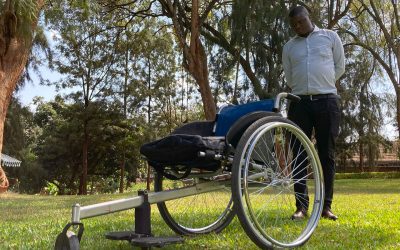
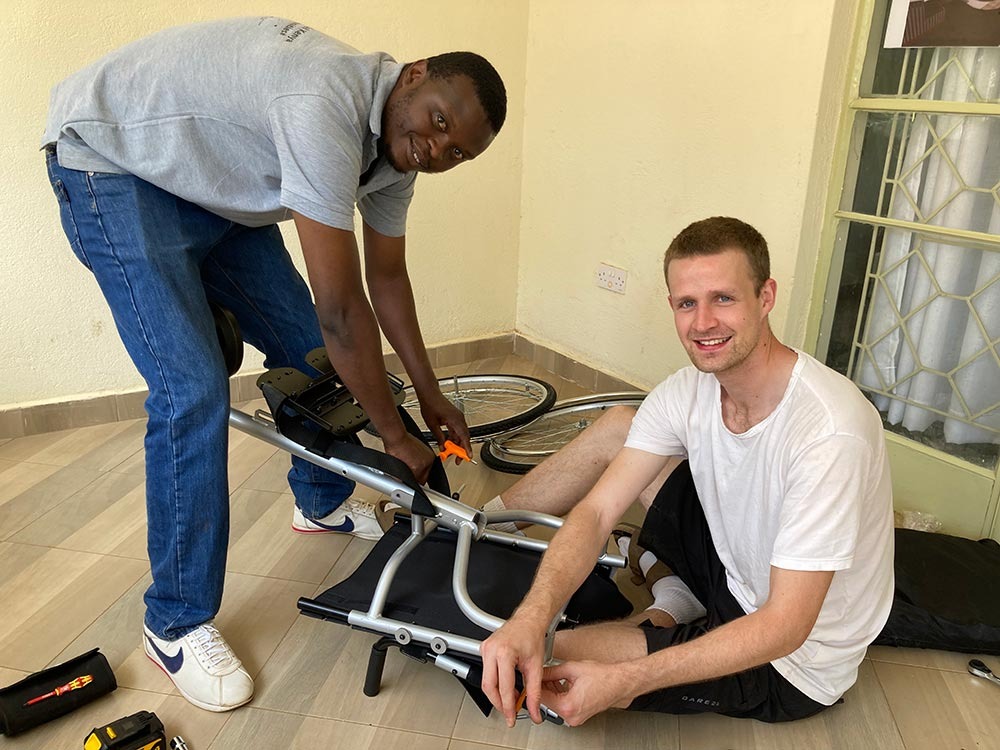
With our partners, and aligning with our skilled workforce and model wheelchair service projects, we have redesigned, prototyped and completed a first round of user testing of a three-wheeled manual wheelchair. Through the project we’re aiming to show if and how such an appropriate wheelchair can be produced at scale and in a commercially viable way in Kenya. This would be a first for the country, and a huge step towards a sustainable supply model for Kenya – and maybe, in time, the region – addressing the severe lack of appropriate wheelchairs and reducing dependency on often unsuitable and costly donated and imported wheelchairs.
Person-centred Care, Wheelchair Services, Phase 2
Country: Kenya
Project duration: 36 months from October 2025
Key partners: Jomo Kenyatta University of Agriculture and Technology (JKUAT). National Council for People with Disabilities (NCPWD). AIC Kajiado Childcare Centre. Don Bosco Technical Training Institute. The Ministry of Labor and Social Protection Vocational Rehabilitation Centres (VRCs).
Focus: Strengthening connections between wheelchair services and communities, creating a platform for sustainable wheelchair repair and maintenance. 700 people with mobility disabilities will have improved quality of life and have the information needed to inform their choices. 400+ care professionals will have new skills and standards of care will be improved.
Summary: The first phase of this project concluded in January 2025, reaching 679 wheelchair users, yet a significant unmet demand remains, with a waiting list of adults and children who have been assessed but are still awaiting wheelchairs. To address this, the project will ensure that appropriate wheelchairs are provided alongside outreach efforts and psychosocial support to bolster the self-reliance of wheelchair users. Training of Trainers will be organised for NCPWD county officers and the County Rehabilitation Technical team across Central Region counties including Nairobi, Kiambu, Muranga, Meru, Machakos, and Makueni. We will also continue embedding professional development at JKUAT, establishing a mobility skills area and workshop space on campus. Training to prescribe and fit wheelchairs and in-service mentoring will be delivered by our specialist staff and Peer Mentor wheelchair users, to ensure the wheelchairs are properly fitted and wheelchair users have follow-up support. An essential part of this follow up is maintenance and repair of their wheelchairs, and so this phase will also pilot artisan training at the Vocational Rehabilitation Centre at KMTC Nairobi. If overlooked, lack of wheelchair upkeep causes breakages, resulting in threats to safety, unnecessary replacements or the need to buy spare parts that could have been avoided. Service Centres are often considerable distances from where wheelchair users live and so our solution is to establish a network of community-based wheelchair maintenance and repair artisans. Regular wheelchair maintenance is crucial for ensuring the device’s reliability, efficiency, and comfort, while also promoting the user’s independence and overall well-being. It’s a small investment of time and resources that yields significant benefits, enhancing the quality of life for wheelchair users. Through these efforts, the project will build a more resilient, accessible, and community-integrated support system for wheelchair users.
Nourish and Flourish
Country: Kenya
Project duration: Pilot for 12 months starting October 2025. Phase 1: 36 months.
Key Partners: Disability Community Centre, Meru Caritas, Meru , Furaha Centre, Meru, Kibwezi Disabled Persons Organisation (KDPO), Makueni. AIC Kajiado Child Care Centre. Technical partners: Real IPM Ripples International. Bethany Kids.
Focus: The development and resilience of 630 children and young people (aged 2 to 15 years) with cerebral palsy and other neurodevelopmental conditions by ensuring that their parents and caregivers have the appropriate information, skills and resources to improve care, nutrition, food security and livelihoods.
Summary: Addressing the gaps in health services and limited access to assistive technology that often leads to children’s late diagnoses, referral and developmental delays. The project provides wheelchairs and other assistive devices, along with training for caregivers and service providers. Core activities include education, nutrition guidance, group therapy, and peer support through our established Parent Carer Training courses. Recognising the challenges faced by caregivers, we will also incorporate sessions on Gender-Based Violence awareness. To promote nutrition and food security, the project introduces vertical bag farming and goat rearing for milk production, combined with training on income generation strategies to support household resilience. Additionally, participants will document their perspectives on critical issues through a photovoice exhibition, raising awareness and engaging policymakers to drive change beyond the project’s scope.
Quality of Life
Country: Kenya
Project duration: 18 months from June 2025
Key partners: JKUAT, Nalondo SCM School, KDPO, DCC, DOM Caritas Meru, APDK, AIC , Kajiado Childcare centre
Focus: Improving the quality of life for 800+ people with disabilities through access to products and services and peer support. To build confidence, maintain good health, achieve independence through personal mobility, and raise awareness and sense of value amongst family and community.
Summary: Addresses the gaps in assistive technology (AT) provision and workforce skills and builds on Motivation Africa’s Peer Mentor training, to tackle the barriers and isolation experienced by people with disabilities and the lack of wheelchair services, outreach and follow-up. Around 700 wheelchairs and 650 other assistive devices will be supplied by Motivation Africa and LDSC and distributed through eight existing wheelchair service partners. Physiotherapists, occupational therapists, wheelchair technicians and health care staff across the eight services will participate in global-standard training so they can assess, prescribe and fit people with basic (can sit upright without support) and intermediate (need support to sit upright) needs. The trained staff will be mentored through in-service visits by clinical and technical specialist Motivation Africa staff and Peer Mentor wheelchair users. This project also addresses the many barriers experienced by people with disabilities by developing a core group of peer trainers to become trainers of trainers and refreshing their skills to lead home and hospital visits to new wheelchair users and lead peer school mentorship to respond to the unmet needs of children reliant on wheelchairs for mobility. An important part of follow up, frequently overlooked, is capacity for wheelchair repairs in local communities. If overlooked, lack of upkeep causes breakages, resulting in unnecessary replacements or the need to buy spare parts that could have been avoided. Prolonging wheelchair lifespan eases the burden on Service Centres which may also be considerable distances from where wheelchair users live. Motivation Africa is dedicated to establishing a network of community-based wheelchair artisans through training and assistance. The project supports technical skills training, empowering 96 individuals to repair, service, maintain, and refurbish wheelchairs using materials readily available.
Workforce Development
Country: Malawi
Project duration: 36 months starting in 2025
Partners: Kachere Rehabilitation Collage, Spinal cord injury association of Malawi, Malawi against Physical Disabilities, Malawi Council for the Disability Affairs, Feed the Children Malawi, Ministry of Gender, Ministry of Health, Salima District Hospital, Queen Elizabeth Central Hospital, St John of God, Jomo Kenyata University of Agriculture & Technology.
Focus: Strengthening wheelchair provision in Malawi through training and capacity building of wheelchair service providers in six districts.
Summary: To integrate WHO wheelchair services provision standards into the curriculum at Kachere Rehabilitation College, to ensure that its graduates have increased knowledge of recommended wheelchair service provision. The project links undergraduates with wheelchair services via work placements so they benefit from hands-on experience and graduate with an accredited wheelchair rehabilitative care qualification; train rehabilitation in-service staff as trainers for upskilling and professional development; improve the infrastructure for wheelchair service delivery and provide wheelchair modification materials and sensitise and raise awareness of health workers and government officials about the need for wheelchair services and impact on people with mobility issues. This will build a skilled workforce that can prescribe and tailor the wheelchair to the person, train the wheelchair user, and provide follow-up support, referral to other appropriate services, and maintenance and repair artisans. It is expected that six model wheelchair service centres will be developed, with 600 wheelchairs being appropriately fitted to meet individual needs.
Survive and Thrive
Country: Malawi
Project duration: Pilot + Phase 1: 36 months to Sept 2023. Phase 2: 24 months to June 2025. Each phase had covered new districts. Phase 3 is in plan.
Partners: Feed The Children Malawi, Malawi Council for the Handicapped, Saint John of God Community Services, Malawi, Ministry of Gender, District Executive Committees, Ministry of Health.
Focus: Building the knowledge and skills of the caregivers of children aged 0 to 10 with cerebral palsy and other neurodevelopmental conditions, to support their childhood development to improve health, play and communication and empower parents and caregivers.
Summary: To promote children’s development, delivering parent carer skills training with psychosocial and mental health support, establishing parent support groups (PSGs) and high value nutritive crops gardens. Improve children’s access to appropriate assistive technology and community-based rehabilitation services. Improve household resilience by creating Savings and Loan Groups, providing trainings and seeding capital to start income generating activities. Build local capacity through training, demonstration and sensitization sessions for community, healthcare, and medical staff on WHO Wheelchair Services (WSTP) and safeguarding, addressing skills gaps in the community-based rehabilitation and professional workforce.
Tunaswasi/ We Are Thriving!
Country: Uganda
Project duration: Phase 18 months to December 2023. Phase 2: 12 months to August 2025. Phase 3 in plan. Each phase has covered new districts.
Focus: To improve the independence, health and wellbeing of disabled children and young people.
Summary: Parent Support Groups (PSGs) will be initiated to equip parents and caregivers with a thorough understanding of their child’s disability, how to best care for their child and advocate for their education (the project also introduces fathers to the training, to better involve them in care and understanding). As part of this, we will develop a pool of PSG Facilitators, sustainably embedding our PSG programme into the local community, ultimately reaching and impacting the lives of more disabled children and their families. We will also train Community Facilitators to run Village Savings and Loan Savings Groups (VSLA), sharing income-generating strategies with parents and caregivers to support household resilience. Children and young people will also be assessed for assistive technology (AT) and referred to rehabilitation services; and healthcare professionals and volunteer facilitators will be trained to understand the importance of referral and appropriate care.