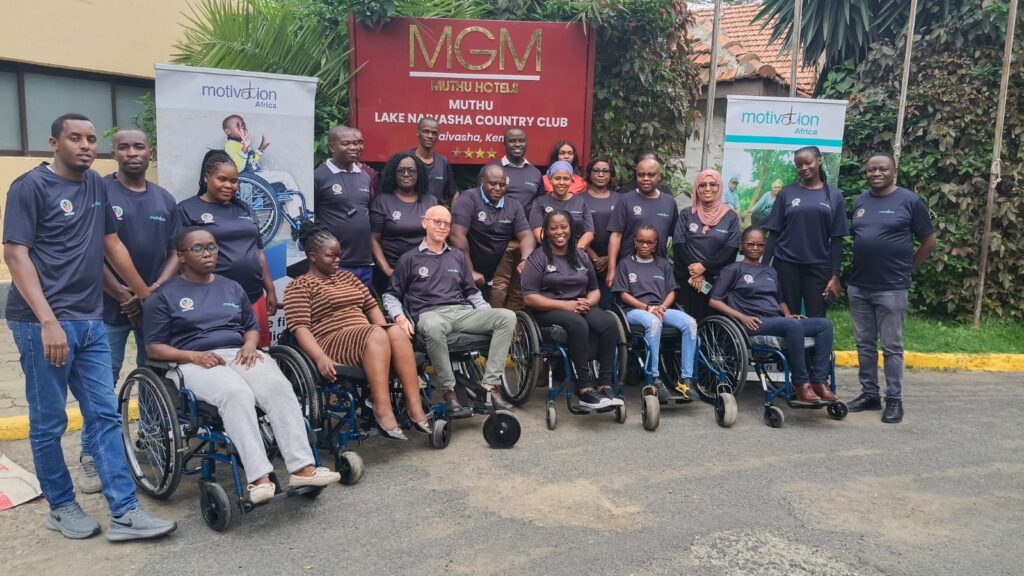
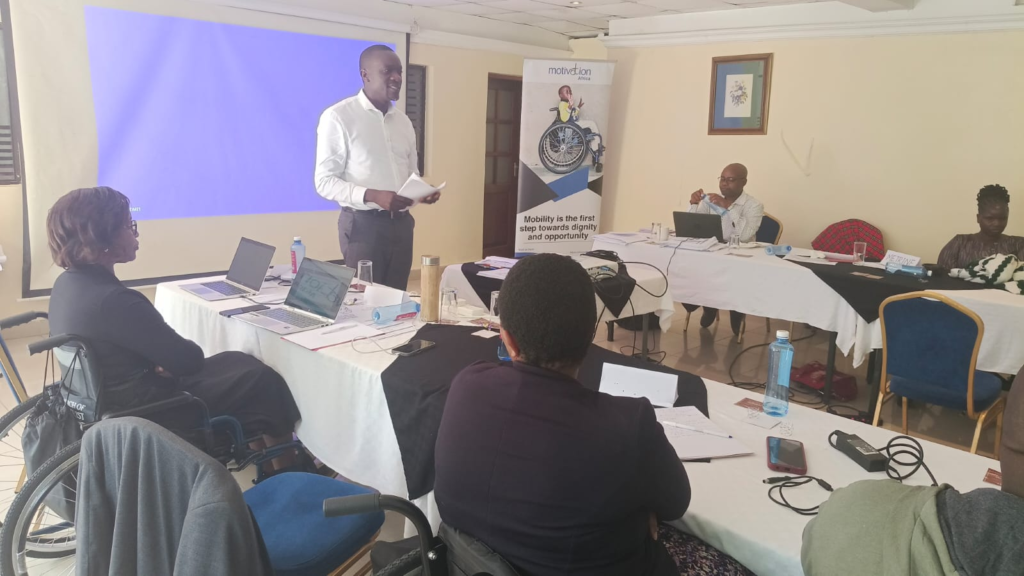
On 16th and 17th April 2026, Motivation Africa, in partnership with the National Council for Persons with Disabilities (NCPWD), conducted a two-day Referral, Screening and Follow-Up Training (RSFT) at Muthu Lake Naivasha Country Club.
The training brought together 22 Disability Service Officers (DSOs) from across Kenya—county-based frontline actors whose responsibilities place them at the heart of disability inclusion. Their roles include the registration of persons with disabilities, identification of individuals in need of assistive devices, conducting accessibility audits, and supporting community empowerment initiatives, including group formation and outreach assessments.
Positioned at the intersection of communities and services, DSOs play a critical role in ensuring that persons with disabilities access the right support.
Building capacity where it matters most
The RSFT training was designed to strengthen the capacity of DSOs to improve access to wheelchair services in line with World Health Organization (WHO) recommended guidelines. Central to this was equipping participants to take on the role of Referral and Screening Actors (RSAs) within their counties.
By the end of the training, participants were expected to:
Explain what a wheelchair service is, including the distinction between basic and intermediate level services
Understand and apply the eight steps of wheelchair service delivery
Appreciate the importance of involving wheelchair users throughout the service process
Identify individuals who require wheelchairs using existing NCPWD structures
Refer them appropriately to local wheelchair service providers
Provide follow-up and community-based support where resources are available
This comprehensive approach ensured that DSOs were not only introduced to concepts, but also equipped with practical, applicable knowledge to improve service delivery at the community level.
A call for the right wheelchair, not just any wheelchair
In his keynote remarks, Dr. Michael Munene, CEO of the National Council for Persons with Disabilities (NCPWD) emphasized the critical role DSOs play in advancing disability rights and bridging service gaps.
“You are the link between the community and services. Having the right knowledge is essential. Let us ensure that every wheelchair user receives not just any wheelchair, but the right wheelchair.”
Beyond emphasizing access, he highlighted a crucial but often overlooked issue—the risks associated with inappropriate wheelchair provision. A poorly matched wheelchair, he noted, can lead to discomfort, long-term health complications such as pressure sores, reduced mobility, and ultimately limit rather than enhance independence.
His remarks set the tone for the training, reinforcing the idea that quality, appropriateness, and user-centeredness must be at the core of wheelchair service provision.
Confronting real challenges in the field
A key highlight of the training was a brainstorming session on the status of Assistive Technology (AT) service provision across the counties where NCPWD operates. This session created space for honest reflection and experience-sharing among participants.
Several challenges emerged:
Limited awareness of existing wheelchair service providers within counties
Weak or unclear referral pathways
Increasing cases of inappropriate wheelchair distribution
Gaps in coordination between stakeholders
These discussions revealed that while services may exist, access is often hindered by fragmentation and lack of information.
“Sometimes the problem is not the absence of services, but the lack of connection to them,” one participant observed. “We are now seeing where we fit—and where we must do better.”
The session sparked a strong sense of responsibility among DSOs, reinforcing their role as connectors within the system—linking individuals to the right services and ensuring continuity of care.
From referral to follow-up: Understanding the full-service journey
The training provided a deep dive into the full wheelchair service delivery pathway, ensuring that participants understood each step and their role within it.
Key topics covered included:
Wheelchair users and their rights
Appropriate wheelchairs and the role of wheelchair services
Referral processes and the positioning of DSOs as Referral Actors
Screening processes and the responsibilities of DSOs as RSAs
Referral to other medical and social services where necessary
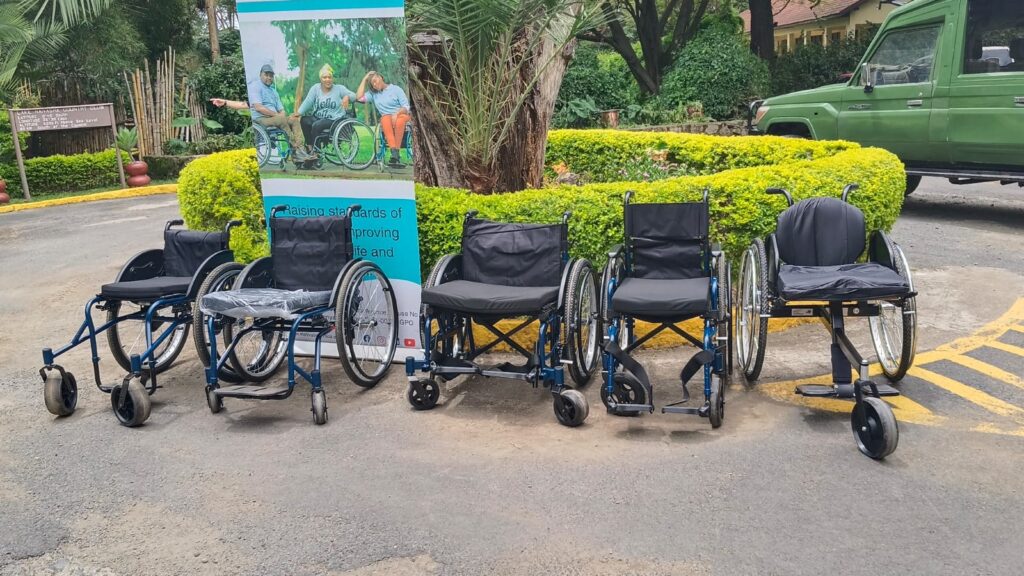
The range and selection of appropriate wheelchairs
Participants also explored clinical and technical aspects of wheelchair use, including:
Proper sitting posture
Prevention of pressure sores
Basic maintenance and repairs
Equally important was the focus on follow-up, which emerged as a cornerstone of effective service delivery. Participants examined how follow-up helps assess whether a wheelchair is meeting a user’s needs and supports long-term wellbeing.
“Follow-up is where impact lives,” one participant shared. “Without it, we cannot know if what we provided is actually working.”
The training also emphasized the role of DSOs in creating demand for wheelchair services by leveraging already existing NCPWD structures within communities. This approach ensures that more individuals who need services are identified and supported in a timely manner.
Shifting mindsets: “I had to unlearn to learn again”
Beyond technical knowledge, the training prompted significant mindset shifts among participants.
One DSO reflected on their learning journey, “I have unlearned so much in these two days. I didn’t even know there were different types of wheelchairs for different needs. Now I understand why assessment and proper fitting is so important.”
This realization underscored a key outcome of the training—not just adding knowledge, but challenging assumptions and building a more informed, intentional approach to service delivery.
Learning from Lived Experience
One of the most impactful sessions featured a wheelchair user sharing lived experiences navigating wheelchair services. This session brought a powerful human perspective to the technical discussions.
Participants engaged in conversations around:
What a truly client-centred approach looks like
Barriers to accessing services
How to determine whether a service is effective from the user’s perspective
“Nothing about us without us is not just a slogan—it is a standard,” the speaker emphasized. “A good service is one that listens, adapts, and respects the user’s reality.”
This session reinforced the importance of participation, dignity, and inclusion, reminding participants that effective service delivery must always be grounded in the lived experiences of users.
Looking Ahead: From Training to Transformation
By the end of the two-day training, DSOs demonstrated a renewed sense of purpose and clarity in their roles. They are now better equipped not only as service providers, but as advocates, connectors, and enablers of access within their counties.
With strengthened knowledge of referral, screening, and follow-up systems and a deeper understanding of the importance of appropriate wheelchair provision—DSOs are positioned to significantly improve access to quality wheelchair services across Kenya.
Ultimately, the training represents more than just capacity building. It marks a step toward a more coordinated, informed, and user-centred system—one that ensures wheelchair users, particularly those in marginalized communities, receive appropriate, safe, and life-enhancing mobility support.